News & Insights · 12 October 2026 · 6 min read
Practical Completion and the Defects Liability Period: Rights, Triggers and Disputed Certificates
PC is the most consequential date on a project — LDs stop, risk passes, security steps down, the DLP begins. Which is exactly why certification of it gets fought.

No single date on a construction project carries more consequences than practical completion. The moment it is certified: liquidated damages stop accruing; possession and risk in the works typically pass to the principal; half the security or retention falls due for release; insurance obligations change hands; the defects liability period begins; and final account machinery starts its countdown. Stack that many consequences on one certificate and the result is predictable — PC certification is among the most contested administrative acts in Australian contracting, and the contest is usually won by whoever understands the definition and runs the process deliberately.
What practical completion actually requires
Under the AS forms and most bespoke contracts, practical completion is not perfection. The standard concept: the works are complete except for minor defects and omissions that do not prevent the works from being reasonably capable of being used for their intended purpose, with the contractor having done everything the definition expressly lists — commonly including testing and commissioning complete, documentation delivered (warranties, manuals, as-builts, certificates), and statutory approvals in place.
Three features of that structure drive the disputes. First, minor is a judgement call made under commercial pressure — a door schedule's worth of snags is minor; an inoperative fire system is not. Second, the express checklist items are absolute: a contract that makes delivery of warranties or an occupation certificate a precondition means PC is unachievable without them, however usable the building. Third, amended definitions keep growing — sign-offs from named consultants, completion of specific systems, principal "satisfaction" wording — each addition another gate someone controls.
The certification process mirrors the definition: the contractor gives notice it considers PC achieved (often with a claimed date), the superintendent inspects and either certifies or issues the list of items preventing PC. That list is where the fight crystallises — and where the contractor's response discipline matters most.
When certification goes wrong
Disputed PC certification runs in two directions. Withheld certification: the superintendent declines to certify, citing incomplete items — sometimes genuinely, sometimes under a principal's pressure to keep LDs running or security intact. The contractor's protections are structural: the superintendent's obligation to act honestly and impartially in certification (the same duty line as Peninsula Balmain), the contract's dispute machinery, and — pragmatically — the evidence file: commissioning results, the documentation transmittals, the intended-use case. Premature or deemed PC: many contracts deem PC to occur on the principal taking possession or use of the works; a principal that moves in while disputing PC frequently triggers the very consequences it is resisting. Both sides should read the deeming provisions before acting on the ground.
The commercial stakes justify the contest arithmetic: every week of disputed PC is a week of LDs, financing costs and unreleased security. But the durable lesson from the cases in this series is about records, not rhetoric — the party with the contemporaneous completion evidence (inspection records, commissioning certificates, transmittal registers) usually holds the certificate's fate.
The defects liability period: a right, not just an obligation
The DLP — typically 12 months from PC, sometimes re-starting for rectified work — is widely misunderstood on both sides. For the principal, it is the period in which defects appearing in the works can be required to be rectified by the contractor at the contractor's cost, with the balance of security held against performance. For the contractor, it is also a right: the opportunity to rectify with its own forces, at its own (lower) cost, rather than fund another contractor's premium rates through a back-charge. The set-off discipline from our companion guide applies in mirror image — a principal that engages others without giving the contractual notice and opportunity to rectify has usually compromised its recovery.
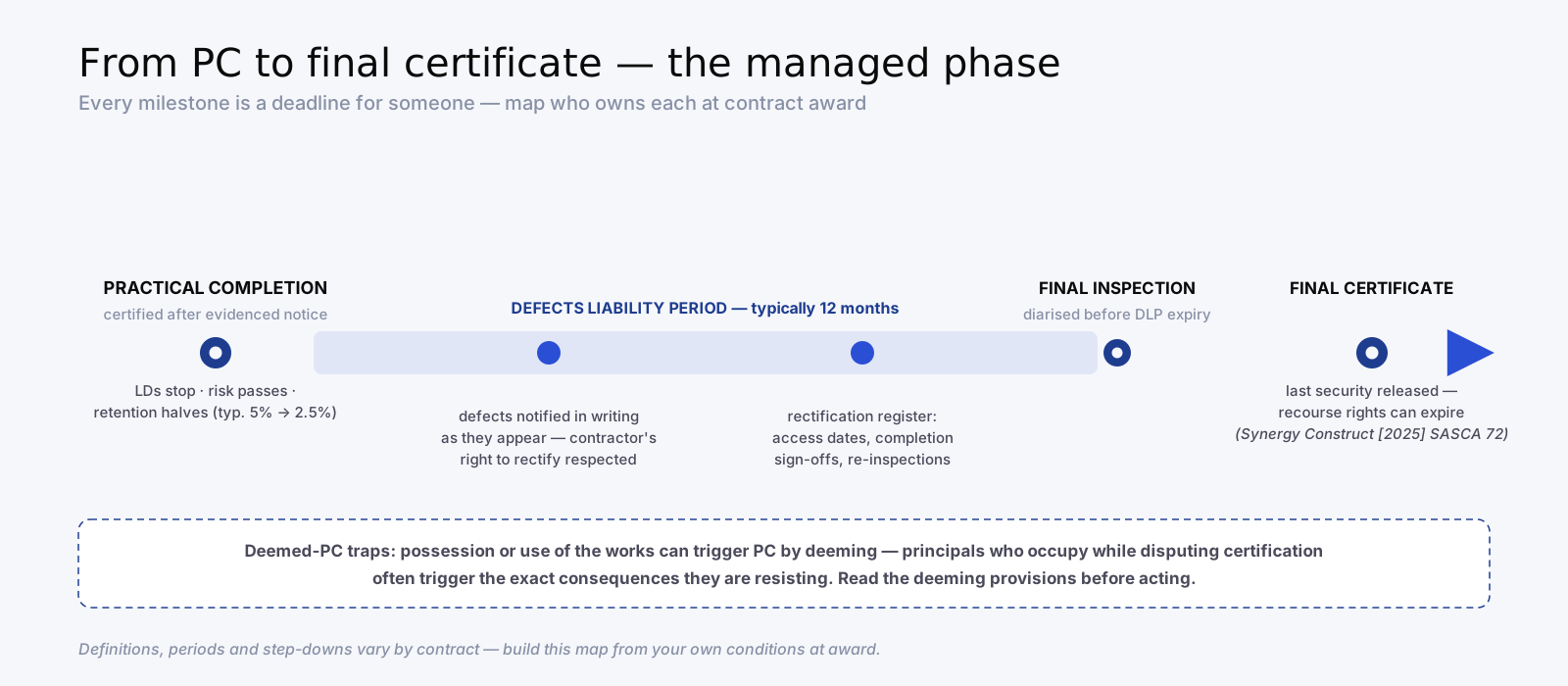
Run mechanically, the DLP is simple: defects notified in writing as they appear; a rectification register with dates, access arrangements and completion sign-offs; the final inspection before DLP expiry; and the final certificate machinery releasing the last security. Run loosely, it produces the classic end-of-job pathologies — defect lists inflated to delay security release, rectification rights bypassed, and final accounts held hostage. Two register entries prevent most of it: the security release triggers (tracked as deadlines, per our security guide — and remember Synergy Construct: recourse rights can expire once release obligations arise), and the defects correspondence trail.
What this means in practice
- Contractors: build the PC case before claiming it. A PC notice supported by the commissioning records, the documentation transmittal register and the express-checklist items closed out forces the superintendent's list to be specific — and specific lists get closed. Claim PC with evidence, not optimism.
- Attack the list, item by item. The response to a withheld certificate is the deductions discipline in reverse: classify each listed item (genuine defect / minor and not preventing use / outside the definition / already complete), answer with documents, and demand re-inspection on a date. The vague list, like the vague payment schedule, is leverage for the other side.
- Principals: don't let occupation outrun certification. Possession and use deeming provisions convert moving in into PC. If the building genuinely isn't at PC, stay out, or document a licence arrangement that the contract permits.
- Treat the DLP as a managed project phase. A standing register — defects notified, access dates, rectification status, sign-offs — plus the diarised final inspection before expiry. For contractors, attend promptly and document completion; the rectification right is only as strong as your responsiveness. For principals, notify in writing as defects appear; the year-end omnibus list invites the response that items are new, not notified, or fair wear.
- Map the consequences cascade at award. One page: what exactly happens at PC under this contract — LDs, possession, risk, insurance, security step-down, DLP commencement, final claim windows (and in NSW post-2019, the statutory final-claim and post-termination machinery). Every entry is a deadline for someone; know which ones are yours.
Key takeaways
- PC requires the works reasonably capable of intended use with only minor items outstanding — plus every express checklist item, which operates absolutely.
- Certification disputes are won on completion evidence: commissioning records, transmittals, and an item-by-item answer to the superintendent's list.
- Deemed-PC provisions (possession/use) catch principals who occupy while disputing — read them before moving in.
- The DLP is the contractor's right to rectify as much as the principal's right to require — bypass it and back-charges weaken; run it as a registered, diarised phase through to final certificate and security release.
This article is general information only and is not legal advice. For advice on a specific contract or dispute, seek legal counsel or contact Sumit Consulting for commercial and claims advisory support.